

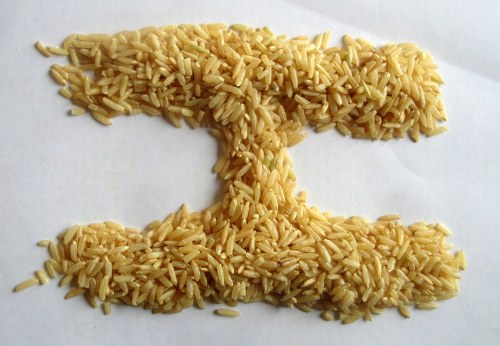
Rice feeds the world!
Three billion people worldwide depend on rice for over half of their daily calorie intake. Most of them eat white rice.
Without rice, even the cleverest housewife cannot cook.
Chinese Proverb
Could the hippies and macrobiotics, two of the biggest brown rice proponents be wrong? What are the differences between brown and white rice, and what are the benefits of each?
Brown rice is the whole rice grain with just the first outer layer (husk or hull) removed through milling. It retains its fibre and germ which contains vital nutrients.
White rice is brown rice that has been milled to remove the bran and much of the germ, reducing fibre and nutrient content. The grain is further polished to take away the remaining layer of germ (called the aleurone layer) which contains essential oils. These oils are what oxidize and go rancid, so removing them makes white rice keep longer.
Sticky rice: Short grain rice has a higher starch content which makes it sticker. Long grain is lighter and so is more separated.
Health Benefits of Brown Rice
Brown rice has:
- Twice the manganese and phosphorus as white.
- 2 ½ times the iron.
- 3 times vitamin B3.
- 4 times the vitamin B1.
- 10 times the vitamin B6.
It is a great source of manganese which is essential for energy production, antioxidant activity, and sex hormone production.
Brown rice has high fibre and selenium content which reduces colon cancer.
The fibre in brown rice reduces the time cancer-causing substances spend in the colon. Selenium has been shown to substantially reduce the risk of colon cancer. White rice has very little fibre.
Brown rice assist weight loss and reduces metabolic problems.
Eating whole grains with lots of fibre, like brown rice, helps with maintaining optimal weight while refined grains have been linked to weight gain, type two diabetes, and metabolic syndrome.
It lowers cholesterol.
A study at Louisiana State University showed that rice bran and rice bran oil reduced LDL (bad) cholesterol.
Brown Rice is Gluten Free.
As more and more people enjoy the benefits of gluten free, rice rice is an obvious healthy choice.
It balances your energy.
In macrobiotics, brown rice has been shown to have balanced energy in terms of yin and yang.
I was amazed how balanced I felt on this diet- and not just physically but mentally and emotionally as well. I also have never seen a skinnier group of people than when I visited a macrobiotic meeting! — Diana Herrington
Unique Phytonutrients:
All whole grains have bound phytonutrients which are released by the action of intestinal bacteria.
These unique substances have the same health-promoting activity attributed to the free form phytonutrients found in vegetables and fruits. One example is a lignin called enterolactone thought to protect against breast cancer and heart disease.
Cautions:
- The main reason brown rice is processed is to increase its storage time. The essential oils in brown rice go rancid after 6-8 months while white rice lasts up to 10 years.
- The protein in white rice is more available to the body. This is important in parts of the world where rice is the main source of calories, particularly since rice is not high in protein to begin with.
- White rice is easier to digest because its lack of fibre. It may be superior for weak and convalescent persons or someone with weak digestion.
Other Alternatives:
Parboiled Rice
In India, where millions depend on rice, the process of parboiling rice was discovered. Uncle Ben’s later copied this process and termed it “converted rice.” This process involves steaming the rice before the final stages of processing. This drives some of the vitamins and minerals into the inner layers before the outer layers are removed. The result is ‘white rice,’ but with more nutrients.
Sprouted or Germinated Brown Rice
Germinated brown rice is easier to digest and the sprouting process adds certain nutrients.
Germinated brown rice has twice the GABA (gamma-aminobutyric acid) of regular brown rice, and ten times the GABA of white rice.
GABA promotes fat loss by stimulating the production of Human Growth Hormone (HGH). HGH increases the sleep cycle, giving deeper rest, boosts the immune system, lowers blood pressure, inhibits development of cancer cells, and assists the treatment of anxiety disorders.
What Rice to Eat – Answered
If you are a reasonable healthy* individual living in North America** or any western country, then there is no question that brown rice and germinated brown rice are much healthier. They are both power foods!
JUST BE CAREFUL it isn’t rancid. Eating rancid fats negates any health benefit you might get from the other nutrients.
Buy small quantities from a source you trust and make sure it is fresh before cooking. Keep it refrigerated or use other preservation methods to keep it fresh longer.
** Most North Americans get more than enough protein and protein deficiency is practically unheard of here. Our health testing shows that while 22% of individuals need more available amino acids, this is usually the result of a digestion problem, not an issue of quantity.
* If you are weak and your digestion is very sensitive, then high-fibre diets may bother you.
Note: Personally, I don’t like the taste of parboiled rice.
Brown Rice Recipes:
Luxurious Brown Rice Pudding: Sugar-free and dairy-free, you can make this fast in a saucepan.
Ginger Cake: Made with brown rice flour, egg-free, white-sugar-free and gluten-free.
Note: If you are considering going gluten free or wondering if you should
- Read Diana’s article on the Dangers of Common Gluten Free Products
- Read the article: Do You Need to Eat a Gluten Free Diet with Dr. Oz’s self test.
- Check out some of Diana’s gluten free recipes by going to the categories section on the right sidebar and finding ‘gluten free’. You can also do a search from the right sidebar.
- Consider doing a Healthy BootCamp. All of the recipes your receive for the BootCamp will be gluten free and particularly the upcoming Healthy Baking BootCamp which focuses on gluten free baking.
Which rice do you eat and why? Please comment below. If you eat brown rice, how do you keep it fresh?

Subscribe to the Newsletter
Get healthy tasty vegan gluten-free recipes and useful lifestyle tips sent to you twice a month
I love brown BASMATI rice. (It is not as ‘tough’ as regular brown rice). We buy it in large bags (largest available at the Save-On-Foods supermarket–10 lbs).
Never seems to be a problem with going bad, as we use about 1 bag every 4-5 weeks. I generally cook up a large batch (3-4 cups dry rice yields 9-12 cups cooked rice), which I then refrigerate in smaller plastic containers. Come dinner time, I generally stir fry some up, often with frozen peas–this delivers a more balanced amino complex, I believe–and is otherwise just delicious!
By the way, I eat this rice for more than just dinner–any time of day is a good time for brown rice, in my books! I enjoy it with tahini (again, peas, essentially) and many other things as well.
Hey Bryce. thanks for the comment. I’m a basmati rice fan myself!
Have learnt to use and love brown rice now. Also mix it with Gokokumai (Mixed Grain) from http://www.carwari.com for something a bit different.
I tend to buy in small amounts, and cook at once and freeze in batches so that I can just defrost and use as needed. It actually makes me eat it more often.
Am now interested in red and black rice and was wondering if they have good health benefits too. Could you possibly advise ?
Thanks for the storage tips Belinda! Red and black rice would also have a lot of health benefits because, like brown rice, they have minimal processing. Every different variety of whole grain rice will have slightly different nutrients and health benefits.
Can I just say what a relief to seek out somebody who truly knows what theyre talking about on the internet.
You positively know learn how to convey a difficulty
to gentle and make it important. Extra people need to read this and understand this facet of the
story. I cant imagine youre not more popular since you definitely have
the gift.
We eat both brown & white rice, incl parboiled. Brown rice is definitely healthier, nutrient rich rice, but not all people like it though! We grew up eating brown rice everyday. Since it takes longer time to cook, using a pressure cooker makes it easier, faster (saving gas or electric and softer rice too!) We always cook rice fresh (and everyday! and don’t grow fat as it is misbelieved).
Raw brown rice doesn’t go bad quickly. You can store rice in the same bag tightly closed or in airtight containers at room temperature for several months. This is my experience from years and years of cooking and eating innumerable of varieties rice! We used to grow different varieties of rice (paddy fields) incl. aromatic rich basmati, jasmine, gandhasale etc. when I was little and have seen the whole process of growing and harvesting paddy and boiling, drying in the sun, milling and making brown rice and much more….
Enjoy eating rice!
suma
Thanks Suma for your comment I was hoping more information and experience would come up regarding the spoiling of brown rice.
I was looking for factual information on arsenic in brown rice. I just started eating GABA rice that I purchase at a local Japanese market and am concerned about eating it every day because of the possible higher levels of arsenic in brown rice. Comments?
I have heard that brown rice contains arsenic. It soaks it up from the soil. White rice does not. When I learned this after cooking only brown rice for 10 years, I switched back to long grain white rice. I had forgotten how much better it tasted. I do not cook it the traditional way but use it in European recipes which can never be replicated with brown rice. I stay away from jasmine and other heavy whites, though. Long grain does not feel as heavy. We are healthier since that switch and less prone to stomach ailments. Eliminating arsenic is crucial. It’s ironic that people avoid white rice because it turns to sugar, but stuff their faces with cupcakes and other sugary foods.
Grow up with rice..Jasmine rice for me
Where are the references for the information in this article?
Article extract:
“Brown Rice has:
2 ½ times the iron.
3 times vitamin B3.
4 times the vitamin B1.
10 times the vitamin B6.”
White rice is iron fortified so it actually has more iron than brown, the B3 & B1 content is very similar if not almost the same. There is about double the B6 in brown rice not 10 times… Did you compare the lowest quality of white rice against the highest quality of brown rice?
How do I know if the brown rice oils have gone rancid?
Kim, smell it and it has an off odour then throw it out.
Great Article
Thank you for the information
Arsenic? is there really arsenic in brown rice, more than white rice?
For those with type 2 diabetes, eating wild rice is healthier as it is not a rice but rather a grass.
Wild rice is very healthy. Here is a link to an article Wild Rice is One of the Most Decadent Gluten-Free Superfoods
I have diabetic, is brown rice recommended for me?
I think you can Best to ask your doctor.